
On February 23, a workshop titled “The Philosophy of Green Education” was held at Genesis Kindergarten and Primary School in Tay Ho District, Hanoi. Experts emphasized the importance of teaching students to protect the environment through small, everyday actions such as sorting waste, disposing of trash properly, and planting more trees.
Creativity Without Limits
The workshop brought together 150 participants, including scientists, education and environmental managers from various provinces across the country. Experts and scholars discussed the philosophy of green education, the Green School model at Genesis Kindergarten and Primary School, and the concept of an intelligent waste recycling social network — a startup model applicable at all educational levels.
Phan Anh, Director of the Genesis Education System, emphasized the importance of early education on loving nature and protecting the environment. A green school, he said, starts with learning experiences designed to prepare students for a healthier, cleaner, and more sustainable future.
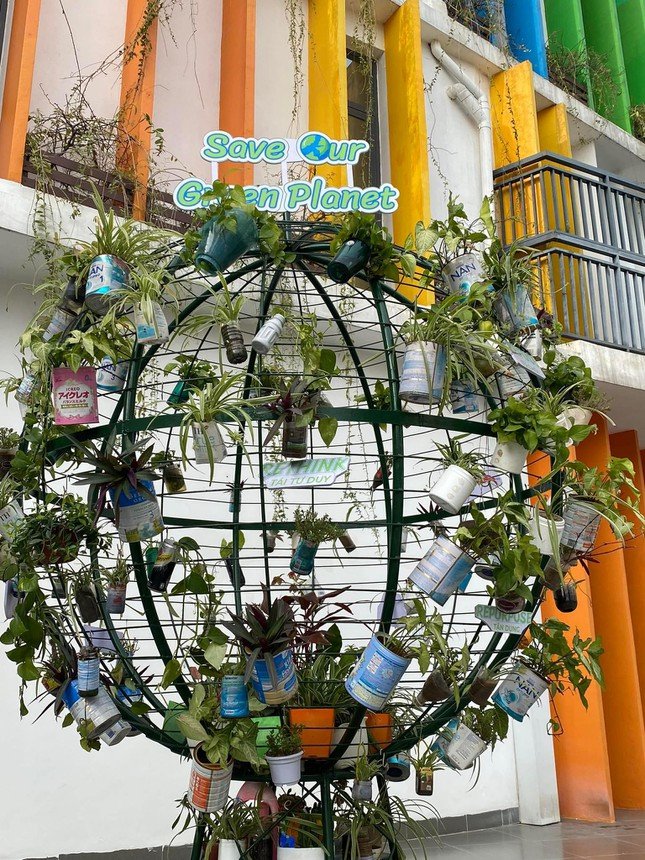
He introduced three pillars of a green school: reducing costs and environmental impacts, enhancing health and well-being, and improving environmental awareness and sustainability. “From specific actions like going paperless, recycling 100% of organic waste, ensuring air, water, light, and noise standards, to upgrading curricula to prioritize education for sustainable development — all students and teachers must embrace this philosophy from the moment they enter the school,” he said.
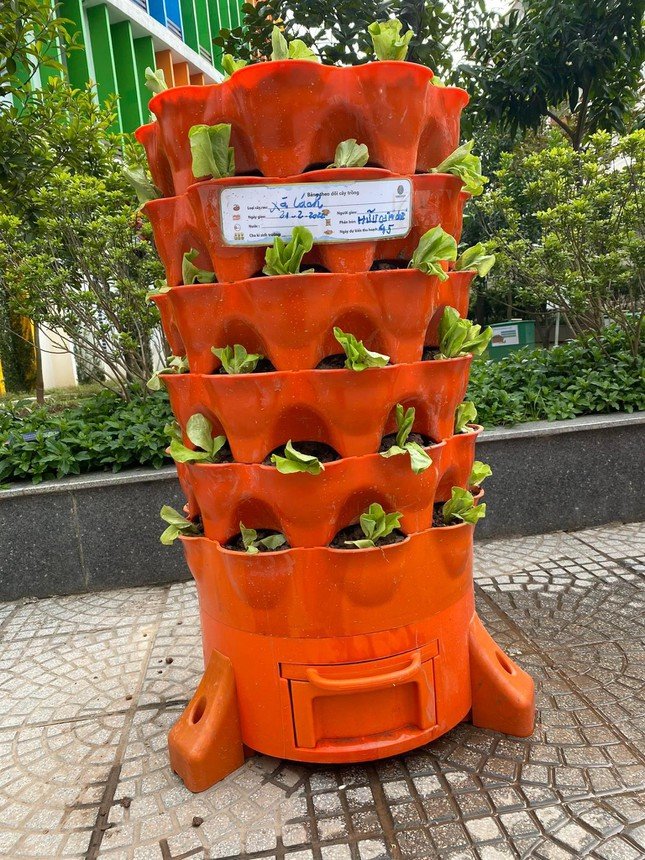
In practice, the school dedicates extensive space to planting thousands of trees, including fruit trees, ornamental plants, organic vegetable gardens, and hydroponic systems, which serve as learning and hands-on practice areas for students.
All available spaces are used to encourage students to read and create. One classroom is fully dedicated to creativity, where students can freely use saws, chisels, hammers, and nails under teacher supervision. Teachers often remind them: “Nothing should be thrown away — instead, let’s recycle it.” As a result, students have created products such as hourglasses from empty cosmetic bottles, artwork from strings and rubber bands, animal transport planes, and tote bags from old clothes. Outdoors, a giant dolphin sculpture “asks” students to feed it trash.
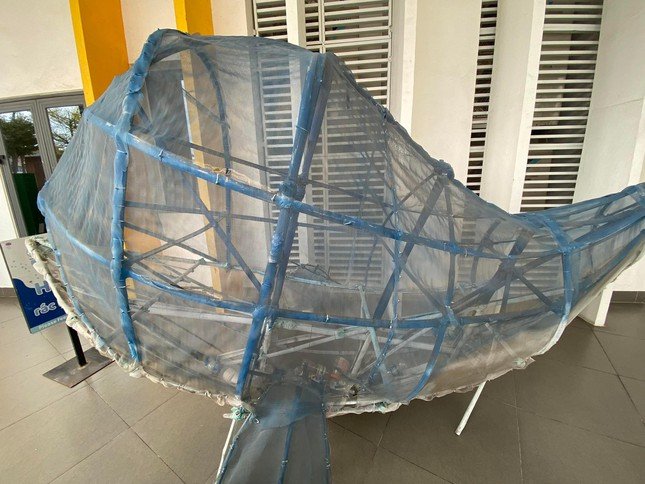
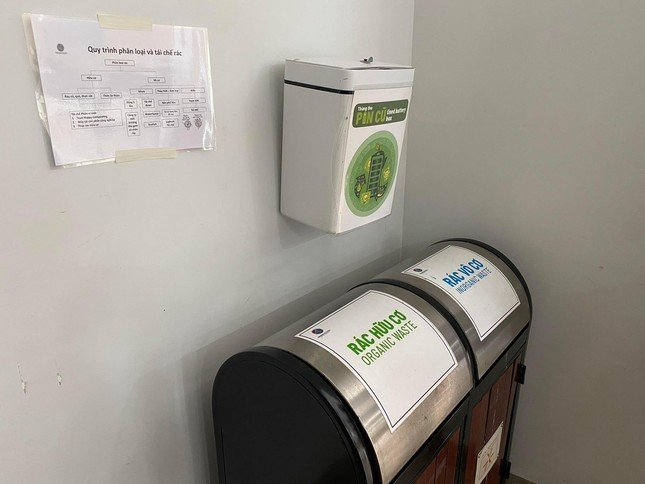
The school provides color-coded bins for organic and inorganic waste and used batteries. Alongside this, waste treatment procedures are displayed to help students understand and follow them.
Teaching Children to Love the Environment from an Early Age
Dr. Bùi Thị Thanh Hương, Director of the Center for Educational Science Research and Application, University of Education – VNU, introduced a model of community-oriented startup innovation applicable at all school levels. In 2006, JICA implemented a “3R” (Reduce, Reuse, Recycle) waste separation project, which reduced landfill waste by 30%, cut waste treatment costs, and extended landfill lifespans.
Dr. Hương shared several effective solutions to support education on waste sorting at the source using three startup education models: organic waste recycling, paper waste recycling, and plastic waste recycling.
Also speaking at the workshop, Dr. Ngô Thị Thúy Hường, lecturer at the Faculty of Biotechnology, Chemistry, and Environmental Engineering, Phenikaa University, shared solutions to minimize the harmful effects of environmental pollution on the health and activities of teachers and students. She also emphasized that environmental education — education to protect “green” for health and the future — must start with understanding people.
Only when nature is healthy can humans truly be happy. If every child is given the opportunity to experience and practice creating a safe, healthy living environment and provided with tools to implement “green education,” we can ensure a sustainable, livable future — and children will be better prepared to adapt to life.
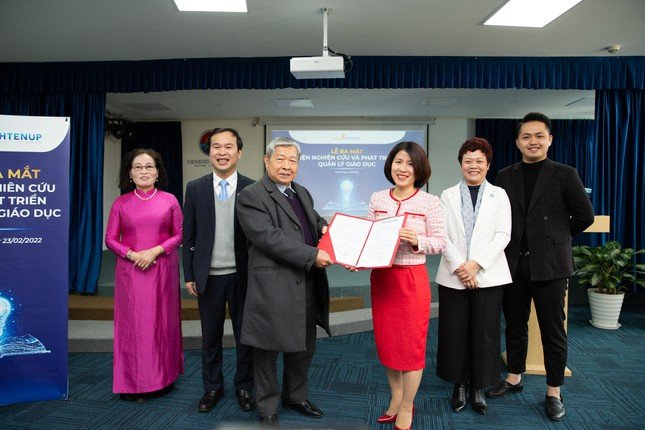
On the same day, the organizers announced the establishment of the Institute for Educational Management Research and Development, under the Vietnam Association of Educational Psychology and Science.
The institute’s functions include research on educational management science and advanced educational models from Vietnam and abroad, which can then be applied to: developing professional competencies, enhancing leadership and management skills for educators, developing local education programs, and building modern, high-quality school curricula aligned with fundamental and comprehensive educational reforms.
Scientific and technological services include professional training on capacity development and leadership for educators, consulting, scientific collaboration, and knowledge dissemination through workshops and publications — using multimedia technology alongside traditional publications.
The institute originated from the Educational Management Network Club, under the Vietnam Association of Educational Psychology and Science. After one year of active operation, the network now has over 400 members, including Vietnamese and international scientists and education managers. It has organized numerous specialized workshops on educational management and school governance based on advanced global models and local practices in Vietnam.
Phan Thị Hồng Dung, Director of the Institute for Educational Management Research and Development, stated that the institute will meet the urgent need for research, knowledge transfer, and practical application in educational management science, contributing significantly to the professional, modern, and effective development of education in Vietnam and beyond.