
In the island district of Cát Bà, Hải Phòng, primary schools have recently introduced an innovative STEAM program on plastic waste developed by the 3SR team. The goal is to help students engage with environmental issues in more interesting, creative, and in-depth ways.
The STEAM method is an integrated teaching approach designed to equip students — particularly at the preschool and primary levels — with comprehensive knowledge and skills across five disciplines: Science, Technology, Engineering, Art, and Mathematics.
By synthesizing knowledge from these five areas, STEAM education helps students develop multidimensional thinking and problem-solving skills. Each lesson is built around real-world situations and topics, requiring students to apply what they have learned to solve problems in the most effective way.
As a tourist island district, maintaining a green, clean, and beautiful environment is always a key objective for Cát Bà town in Cát Hải District, Hải Phòng City. Recognizing the importance of the STEAM program focused on plastic waste as both a learning component and a tool for raising awareness among teachers, students, and local residents, Tô Thị Khâm, Head of the Cát Hải District Education Office, stated:
“When we enrich knowledge, understanding, joy, and creativity in life, that is also the pride and prestige of educators and schools. Our mission is not just to teach students how to read and write, but to educate them to become well-rounded individuals who are fully aware of environmental and social issues.”
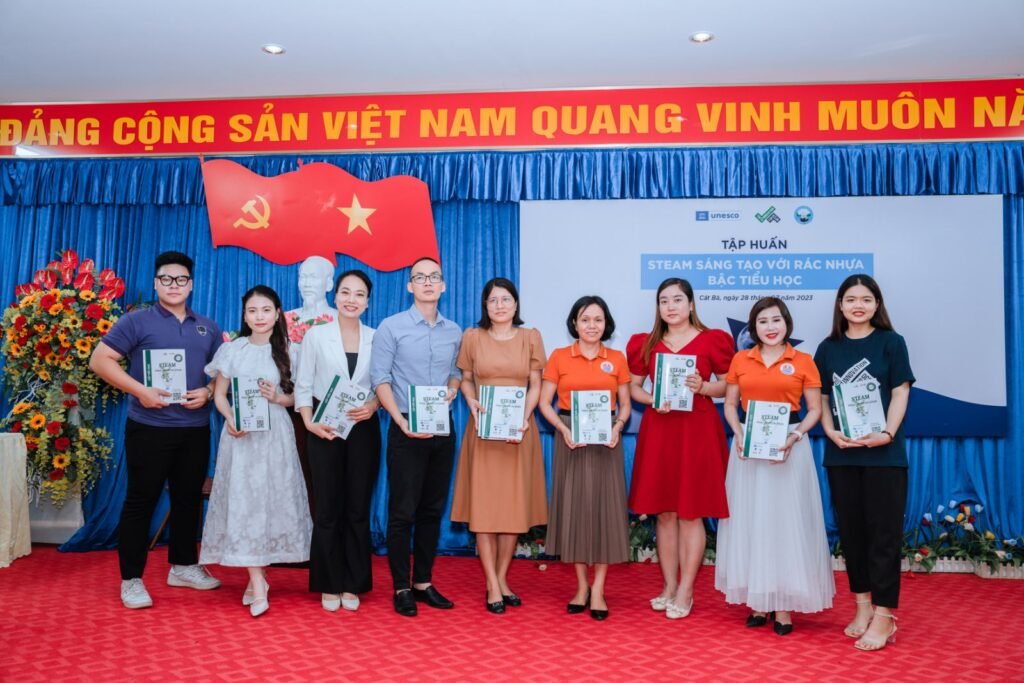
Several STEAM-based programs dealing with plastic waste have already been introduced at the preschool and primary levels in Cát Bà. However, they were previously conducted only in a basic, unspecialized manner — without a comprehensive, structured model.
Đoàn Minh Phương, Principal of Chu Văn An Primary School in Cát Bà town, shared the visible impacts of implementing this new STEAM program:
“When technology transfer happens, the results are more effective than just continuing to raise awareness among students. Secondly, if the official curriculum can integrate environmental awareness education, it would be highly beneficial. And thirdly, recycling activities that generate value can provide financial support for student projects, creating motivation for them throughout the learning process.”
Source: vovgiaothong