Vietnamese startups today enjoy significant advantages when it comes to raising capital. First, there are numerous venture capital funds, and Vietnam is emerging as an attractive destination for them. In the field of venture capital, investments in technology startups account for a large proportion.
Vietnam is considered one of the countries with abundant, high-quality technology talent compared to others in the region. At the same time, most startups are still in their early stages. This is one reason why foreign investment funds see Vietnam as a potential market. As a result, startups can easily meet with investment funds to present their business ideas and seek funding. In addition to foreign funds, the number of domestic venture funds has also grown considerably, making fundraising for strong and high-quality startups less challenging.
However, the main challenge is that Vietnam’s startup ecosystem is still relatively young, and businesses are inexperienced and lack professional management. Investment funds entering Vietnam still tend to value startups relatively low. While this may be attractive to investors, it can disadvantage startups, as the capital they raise might not be proportionate to the amount of equity they give away.
This situation is expected to improve gradually as the ecosystem matures and startups become more professional, leading to higher valuations. Of course, as valuations rise, startups may become less attractive to some investors.
One of the first requirements for startups seeking funding is to have clear and transparent business data. In the early stages, startups mainly focus on getting a product to market and surviving, often neglecting their financial records and corporate governance. This is a limitation during the due diligence process. Therefore, from the very first day of operation, startups should ensure that their financial and operational data are transparent and well-documented.
Moreover, startups need to pay attention to their business plans, growth strategies, and long-term vision. These are key factors investors will consider when deciding whether to invest. Investors ultimately seek profits, and startups must understand that once they raise capital, investor money becomes company money — it must be used for business development, not personal gain. Hence, startups must operate under proper corporate governance structures.
Investment funds are highly “sensitive” to startups with unclear, non-transparent governance or those that deviate from initial commitments. Such issues damage the company’s credibility, making future fundraising rounds more difficult.
Regardless of circumstances, once funding is received, startups must ensure that investors’ money generates returns. They will face pressure to achieve growth and meet the KPIs they committed to.
Regarding investor “preferences,” in the past, funds often focused on high-growth startups and sectors with significant potential. However, after the Covid-19 pandemic, their preferences shifted toward more practical investments with a focus on profitability. Startups do not necessarily need to be profitable to raise funds, but they must have a sustainable business model and a clear path to profitability. Simply burning capital to rapidly acquire users and capture market share is no longer the primary investment strategy.
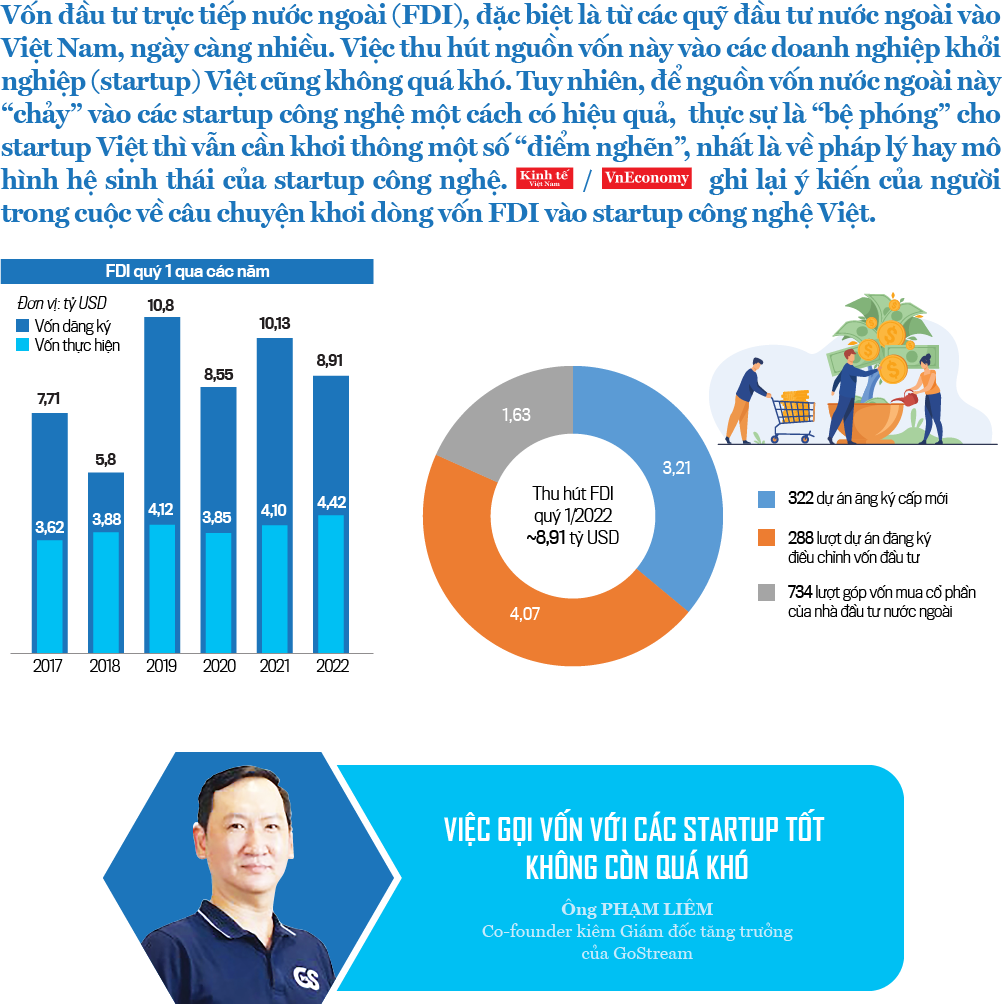
The amount of capital invested in startups in 2021 was impressive compared to 2020. Total foreign investment in technology startups reached approximately USD 1.4 billion, surpassing the previous peak in 2019. In terms of quality and maturity, however, there was not a dramatic change. The surge in 2021 was partly due to deferred investments from 2020, when many investors held back due to the pandemic.
This is a positive sign because it shows that investor capital is still flowing into Vietnam rather than leaving. In 2021, most large deals — ranging from USD 70–80 million or more — were concentrated in fintech and e-commerce, with companies like Tiki and Momo leading the way. Although the total capital inflow was substantial, it was still concentrated in large startups or “unicorn-to-be” companies.
Additionally, blockchain and crypto startups were also “hot” and attracted significant investment, often through alternative fundraising methods such as ICOs (initial coin offerings) and crowdfunding.
However, starting from 2022, we will likely see more positive developments in EdTech (education technology) and MedTech (medical technology). Many startups that raised hundreds of millions of dollars in 2021 were already large and approaching IPO stage. Therefore, future funding rounds will focus more on IPOs rather than additional multi-hundred-million-dollar investments. In 2022, there will likely be more mid-sized startups raising Series B rounds in the tens of millions of dollars, as well as many Series A rounds.
In 2021, the total number of funding deals was relatively small, but the total capital inflow was high. In 2022, this dynamic is expected to change: total capital may remain similar, but the number of deals will increase, with smaller deals becoming more common.
For startups, capital from both domestic and foreign investors is valuable, as each offers distinct advantages in supporting business growth. For startups aiming to expand internationally, foreign investors provide crucial opportunities to secure future funding and connect with global partners.
Startups should choose investors that align with their goals, needs, and growth stages. In some cases, domestic investors are sufficient and can provide quicker funding processes. Currently, Vietnam has a growing number of investment funds, though their scale remains limited. Foreign investors, on the other hand, typically have deeper pockets and more experience, so they often participate in larger deals. Nearly 75% of startup investment capital in recent years has come from foreign funds. However, this balance may shift in the future.
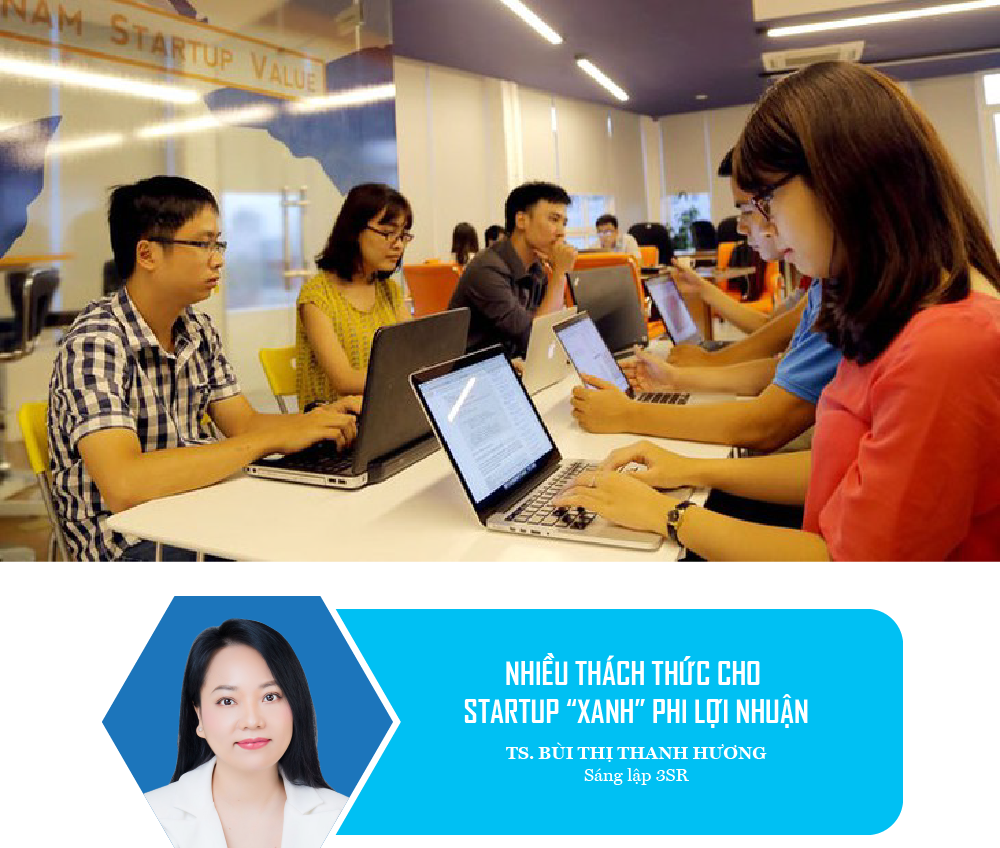
Carrying the mission of a smart waste-recycling education organization, 3SR connects communities through technology and networks, pursuing the goal of “a waste-free life.” Working alongside six student co-founders from the University of Education – Vietnam National University in the “3SR – Smart Waste Recycling Social Network” project, the team has received multiple awards and significant community attention. 3SR now plays a key role in Vietnam’s Zero Waste Alliance and the Zero Waste in Schools Network.
The project operates around three recycling cycles: paper, plastic, and organic waste. Its business model focuses on core products such as the “Green Education” mobile app (which allows users to collect points and redeem them for rewards) and the “STEM+ Smart Waste Recycling Education” program for schools in Vietnam and Southeast Asia. These activities aim to influence behavior and habits related to waste sorting at the source. Over the next two years, 3SR aims to expand to 30 schools in Hanoi, 20 in Da Nang, and 30 in Ho Chi Minh City.
However, as a “green education startup” operating in a nonprofit segment, revenue from 3SR’s educational products is unstable. Schools are not yet ready to adopt such solutions and lack familiarity with green education products. Additionally, the startup does not yet have sufficient resources to invest in market development and business implementation.
The company also faces challenges in raising funds to expand and implement its meaningful business model, along with limited real-world business experience — challenges that have persisted even after the Covid-19 pandemic.
Opportunities, however, are growing for green startups like 3SR as the circular economy and green economy are now considered future trends and are being supported by government policies. Furthermore, the Ministry of Education and Training and the Ministry of Natural Resources and Environment are seeking “green education” models to promote circular economy principles, low-carbon development, and the 17 UN Sustainable Development Goals. 3SR’s business model aligns closely with Vietnam’s current context and has the potential to attract funding from political, social, and corporate organizations, all working toward changing behaviors and habits around waste sorting at the source.
We hope to receive greater support in the future to connect with domestic and international organizations and businesses to realize our dream of a community-driven startup for a greener future.

Vietnam is becoming a highly dynamic market for tech startups, with a rapidly increasing number of investors showing interest and committing capital. In fact, due to favorable conditions and talent availability, many tech companies and entrepreneurs from Korea, Japan, and China are now coming to Vietnam to launch startups. Foreign investment funds are also actively exploring and investing in Vietnam. While Vietnamese startups still face significant challenges — including attracting capital, building efficient operations, and recruiting talent — they continue to attract strong international interest.
Each startup has unique strengths that can attract foreign investment. Most foreign funds are interested in startups and ideas that can scale rapidly in the regional or global market. They pay close attention to how founders run their businesses, their leadership qualities, and their strategies for market expansion.
Many overseas investors — including Vietnamese expatriates and angel investors — are eager to invest in Vietnamese startups but remain hesitant due to concerns about capital repatriation and legal protections when exiting investments. This reflects a gap in knowledge about Vietnam’s investment laws among foreign investors as well as among startups themselves.
As a result, many Vietnamese startups register their companies in Singapore, the United States, or other countries to make it easier for investors to inject funds, track operations, and ensure greater transparency. This is an important consideration for Vietnamese tech startups seeking to attract foreign capital.

Source: vneconomy