
Education has traditionally been considered a nonprofit field with few pathways to entrepreneurship. According to conventional thinking, teachers are celebrated for their dedication to education without regard for personal gain. Yet, Dr. Bùi Thị Thanh Hương approaches it differently — she believes in entrepreneurship and innovation rooted in nonprofit purposes, focusing on community service and leveraging untapped social resources to solve shared challenges.

Selected as Co-Leader of the “Circular Economy” Village at TECHFEST Vietnam 2022 by the Ministry of Science and Technology, Dr. Hương confidently shares:
“Starting a social-impact business is difficult, but for me, tackling hard problems is the exciting challenge I want to pursue.”
Entrepreneurship in Education – More Challenges Than Opportunities
For Dr. Hương, working with students is a source of happiness and endless inspiration. During the 2019–2020 academic year, she and her students developed the PM2.5 Mobile App, a system that warns about fine dust pollution in schools. The project won a national student research award and helped raise awareness about air pollution in Hanoi’s schools. The system also won the Outstanding Community Project Award at the 2020 National Teaching Skills Competition.
In 2020–2021, Dr. Hương continued to guide three student groups in community-focused education projects:
- Chatbot – AI Chemistry Tutor: a free automated chemistry practice tool on Facebook.
- Star Edu – Teacher’s Assistant: a free mobile app to help homeroom teachers evaluate students’ behavior and ethics.
- 3SR – Smart Waste Recycling Social Network: a free mobile app supporting waste sorting and collection in schools.
“I choose to ignite the flame of innovation and nurture students’ dreams of building their own lives. This is essentially a method of education through inspiration — transforming the learning process into a process of self-education, which I believe is more unique and impactful,” Dr. Hương explains.
But how can these community-oriented ideas evolve into actual start-ups that allow students to test their potential and make the most of their creativity and passion? Compared with other industries, education is a particularly difficult field for entrepreneurship. Career paths are well-defined: teachers teach, education managers manage. Most graduates from teacher training programs become employees in public or private schools or open private classes. Rarely do they think about starting innovative businesses in education.
Dr. Hương, however, sees things differently: she believes that even in a nonprofit sector, innovation and entrepreneurship can emerge from a community-centered mission. “Starting a social-impact business is difficult, but for me, tackling hard problems is the exciting challenge I want to pursue,” she says.
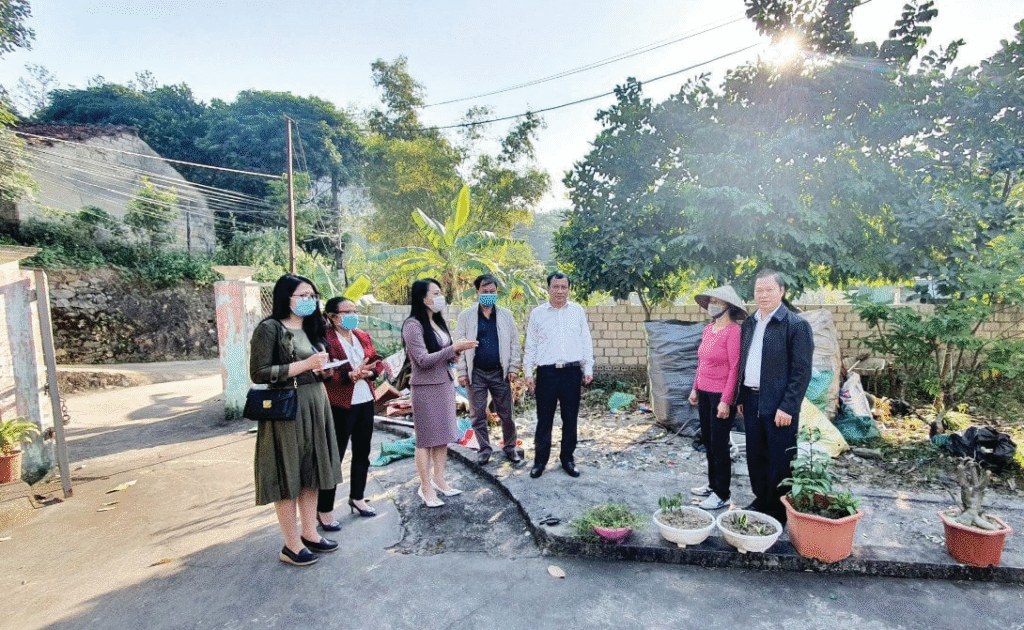
Dr. Hương spent six years exploring new fields after finishing her PhD — from smart agriculture in Israel and Taiwan, to mobile-learning models (BYOD) in Australia, to education for sustainable development in Singapore and China. During a return visit to her old research field, she was once again struck by the problem of waste: Vietnam ranks among the top five countries in Asia for plastic waste and the top 20 globally for municipal waste. The 3R waste-sorting project launched by JICA in 2006 reduced landfill waste by 30%, cutting treatment costs and extending landfill lifespans. Yet, just one year after the project ended, people considered “carrying three bags to dispose of trash” a silly idea. What caused such a promising habit to die out so quickly?
With six student co-founders, Dr. Hương launched 3SR – Smart Waste Recycling Social Network, which has since won multiple awards and attracted wide community attention. It was among the top 5 EdTech projects in Vietnam in 2021, won 3rd place and the Most Popular Team Award at the “VNU Innovation and Startup Ideas 2021” competition, and became one of the two start-ups attracting the most investors at TECHFEST Connect 2021. Today, 3SR plays a key role in Vietnam’s Zero Waste Alliance and the Zero Waste in Schools Network.
With the mission of becoming a leading educational organization for smart waste recycling, 3SR connects communities through technology and networks, pursuing a vision of “a waste-free life.” It aims to expand from Vietnam to the regional and global markets.
Over the next two years, 3SR plans to be implemented in 30 schools in Hanoi, 20 in Da Nang, and 30 in Ho Chi Minh City, before expanding internationally. The 3SR initiative is built on three pillars:
- Student Startup Ecosystem: Focuses on the circular economy of waste as a resource, fostering student innovation and entrepreneurship.
- Mobile App SR1: Available on Apple Store and CH Play, it lets users collect reward points redeemable for gifts or cash through partnerships with Lazada, Shopee, Tiki, Grab, and others, while the server manages user data and optimizes collection operations.
- STEM+ Smart Recycling Education Program: Integrates waste recycling lessons into curricula from preschool to high school, helping schools address environmental and sustainability education challenges, particularly STEM+ approaches.
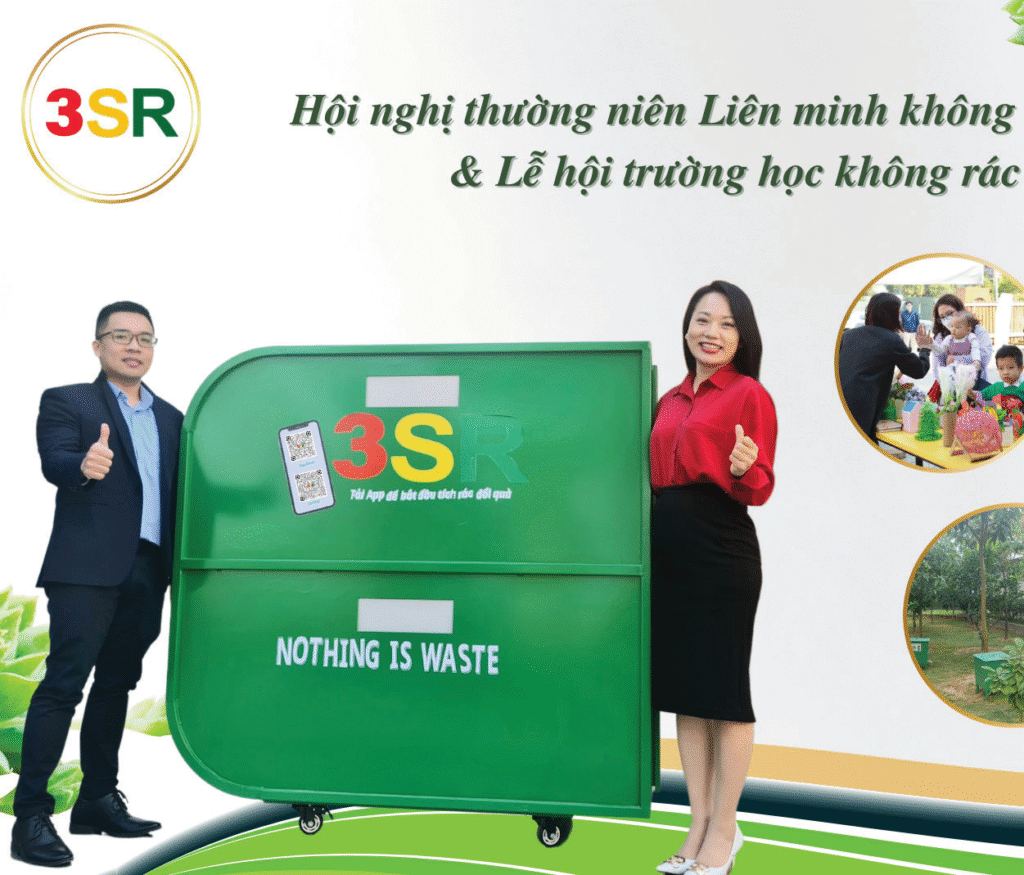
Waste and Community: From Worthless to Priceless
3SR began with what society “throws away” — paper, plastic, and organic waste — and connects businesses to fulfill their corporate social responsibility through circular economy projects focused on recycling these materials. With its innovative approach, 3SR has partnered with reputable companies from the United States, Germany, and Thailand to apply AI in circular waste management within Vietnamese schools.
Viewing “smart waste recycling education” as her life’s contribution, Dr. Hương continues to inspire students to pursue entrepreneurship for the common good. As Co-Leader of the Circular Economy Village at TECHFEST Vietnam 2022, she works with students to realize the mission of “zero waste in schools.” Schools, in turn, spread this culture to communities, shaping a new societal attitude toward waste — transforming it from worthless to priceless, a value of immense importance for Vietnam in the new era.
Source: vnu.edu.vn