The circular economy does not begin with waste treatment, but with how people relate to and interact with resources. The deposit–return model is opening up an effective approach to shaping such behavior, starting from the school environment.
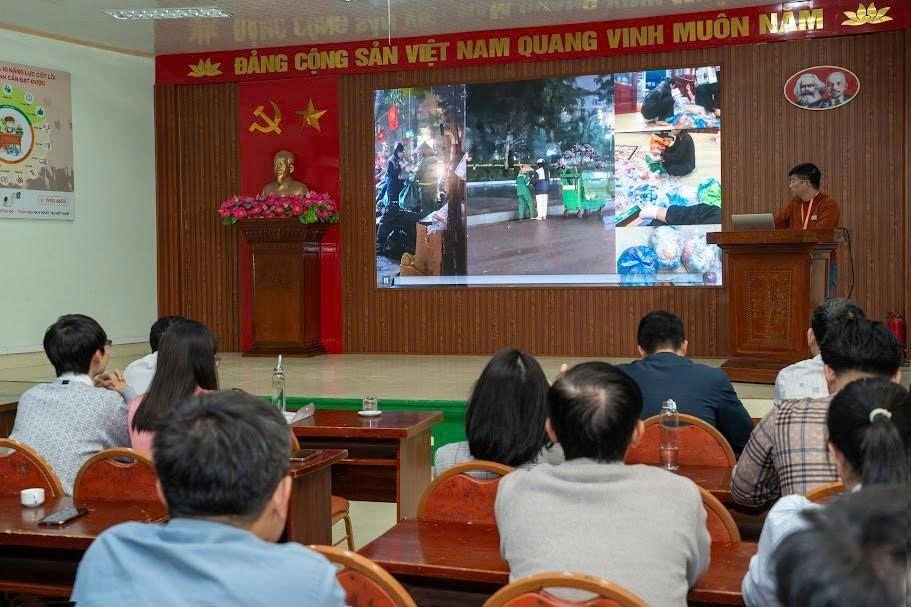
On 12 December 2025, in Hai Phong City, a training workshop titled “Enhancing capacity and transforming awareness and mindset for grassroots-level new rural development officers on plastic waste management at source, towards a circular economy” was held. The event was jointly organized by the Department of Environment and the Hai Phong Department of Agriculture and Environment.
The event not only marked the beginning of a series of professional activities but also sent a clear message: the new phase of new rural development requires a fundamental shift—from administrative management to environmental behavior governance.
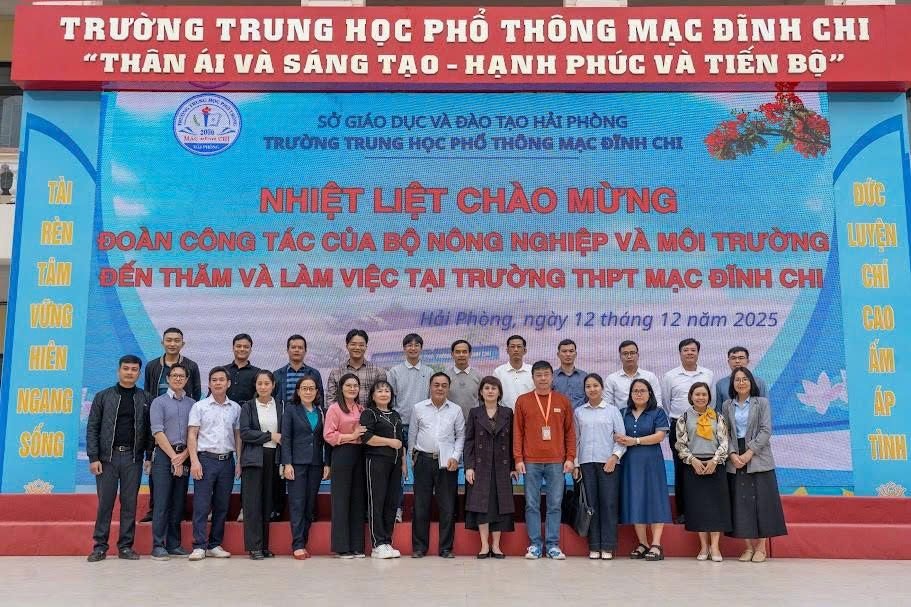
In the context of Viet Nam’s strong transition toward a circular economy and sustainable rural development, the content of the training highlighted that environmental policies can only be truly effective when they are closely linked to changes in social awareness and habits.
Official Dispatch No. 3783/MT-CLMT dated 28 November 2025 from the Department of Environment was not merely an implementation directive, but a reaffirmation of the central role of people in the challenge of waste management—particularly plastic waste at source, which poses a growing challenge in rural areas.
Within this broader transition, the Deposit–Return mechanism has emerged as an economic instrument with strong educational value. In essence, it is a system in which consumers pay a deposit when purchasing a product and receive a refund when returning the packaging after use.
Globally—especially in many European countries—deposit–return systems have demonstrated outstanding effectiveness, achieving packaging return rates of 85–95%. However, the core value of this mechanism lies not in the recovery rate itself, but in redefining the relationship between people and materials. Waste is no longer viewed as something to be discarded, but as a temporary asset awaiting reintegration into the circular flow.
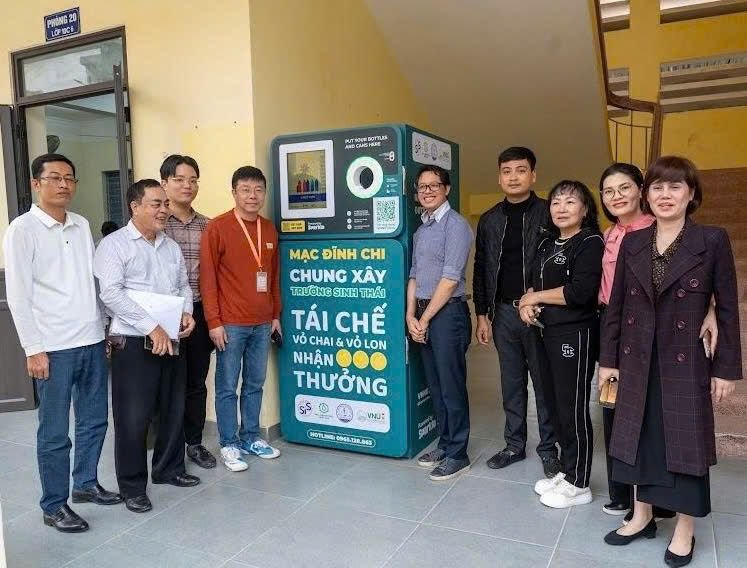
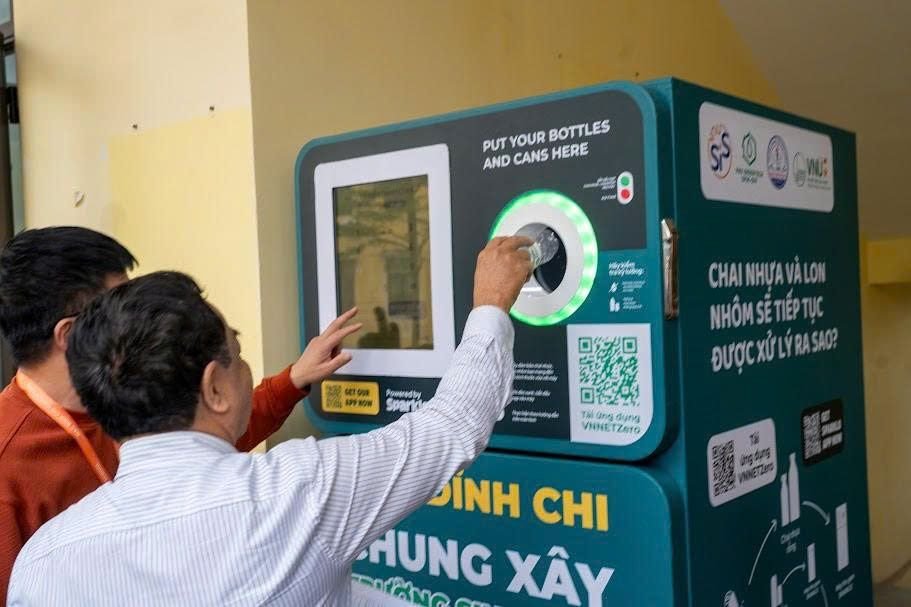
When implemented in an educational setting, deposit–return goes far beyond the meaning of a simple refund. It becomes a practical lesson in environmental economics, where students learn that every consumption behavior has consequences and that every resource carries value. For this reason, the Eco-School model is considered an ideal space to sow the seeds of deposit–return thinking.
With a focus on behavior change through daily practice, this model enables students to directly sort, return, and accumulate value within the school environment, transforming abstract concepts of the circular economy into tangible experiences. The returned value is not limited to money—it may take the form of green points, carbon credits, or community contributions. In this way, the “dispose-and-discard” mindset is replaced by a “use–return–regenerate” approach.
Practical implementation in Hai Phong through the VNNETZERO model has demonstrated that this approach is entirely feasible. The bottle and can collection stations integrated with carbon credit accumulation serve not only as collection points but also as a behavioral infrastructure system, where technology, data, and Net Zero education are closely connected. Each packaging return is recorded as a measurable environmental action that can be analyzed and converted into carbon value, thereby linking individual behavior with broader emission reduction goals.
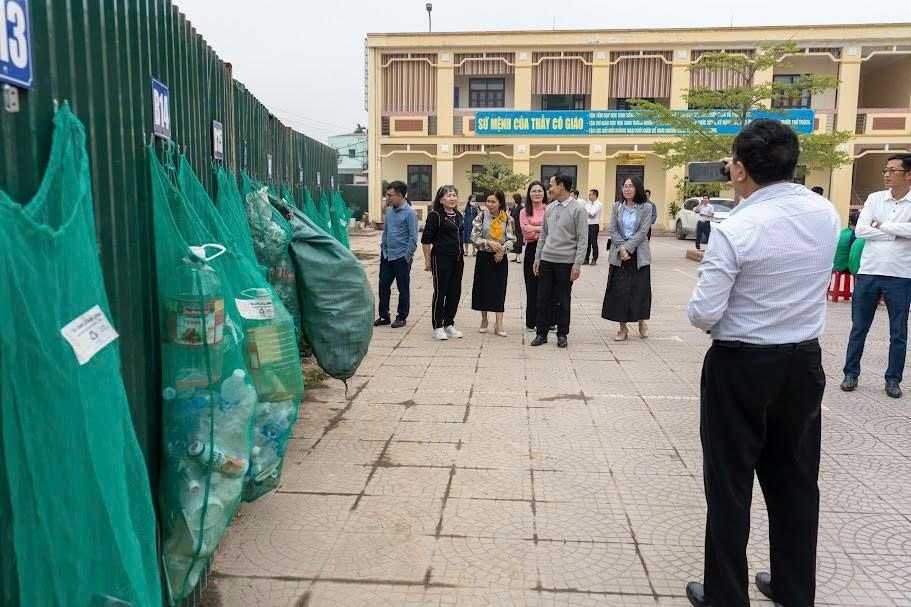
During the site visit, the delegation from the Ministry of Agriculture and Environment highly appreciated the practicality, scalability, and alignment of the VNNETZERO model with the direction of source-based waste management in new rural development for the 2026–2030 period.
From a broader perspective, deposit–return in schools is not merely a technical solution, but a form of “soft infrastructure” for the circular economy. If recycling plants and treatment lines represent hard infrastructure, then habits, behavioral incentives, and feedback mechanisms constitute the soft infrastructure that ultimately determines how the entire system functions.
Schools, as institutions shaping future citizens, are the most appropriate places to establish this foundation. When students become accustomed to deposit–return practices through even the smallest everyday items, their sense of responsibility toward resources gradually extends to larger domains such as energy use, emissions, and sustainable development.
From eco-schools to rural communities and ultimately to a Net Zero society, the deposit–return model demonstrates strong potential for diffusion. Students bring these habits home, while school-generated data become quantitative evidence supporting EPR programs, CSR initiatives, and local environmental commitments. At this intersection of education, policy, technology, and practice, the circular economy ceases to be merely a guiding concept and instead becomes a daily way of life, formed and reinforced through small actions with long-term significance.
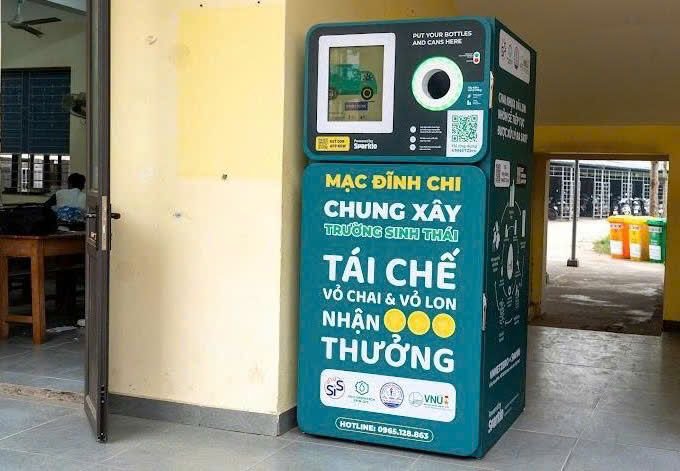
The official dispatch from the Department of Environment is not simply an administrative document—it is a clear affirmation that green transformation begins with a transformation in mindset. In this context, deposit–return—when systematically implemented within the Eco-School model—becomes a powerful tool for turning policy into behavior, and behavior into culture.
VNNETZERO in Hai Phong demonstrates that when research, technology, education, and policy converge, the circular economy is no longer an abstract concept, but a vibrant daily practice.
Source: kinhtemoitruong.vn